
Science Subject Leader: Miss K O’Connor
As a core subject, children are able to learn in a variety of different ways about how the world works. We encourage our pupils to be curious about how things work and give them the skills to develop key knowledge of the application of science.
Intent
At Whitehill Primary, our intent is for children to develop scientific knowledge and understanding through a curriculum that inspires curiosity, excitement, and wonder about the world around them. We aim to equip pupils with the skills and confidence to become “super scientists,” able to ask questions, investigate, and explain scientific phenomena.
Our curriculum builds progressively across biology, chemistry, and physics, developing knowledge, conceptual understanding, and key scientific vocabulary year by year. Lessons are practical, enquiry-based, and linked to pupils’ interests, the local environment, current affairs, and wider media, while also reinforcing reading, writing, mathematics, computing, PSHE, and DT skills.
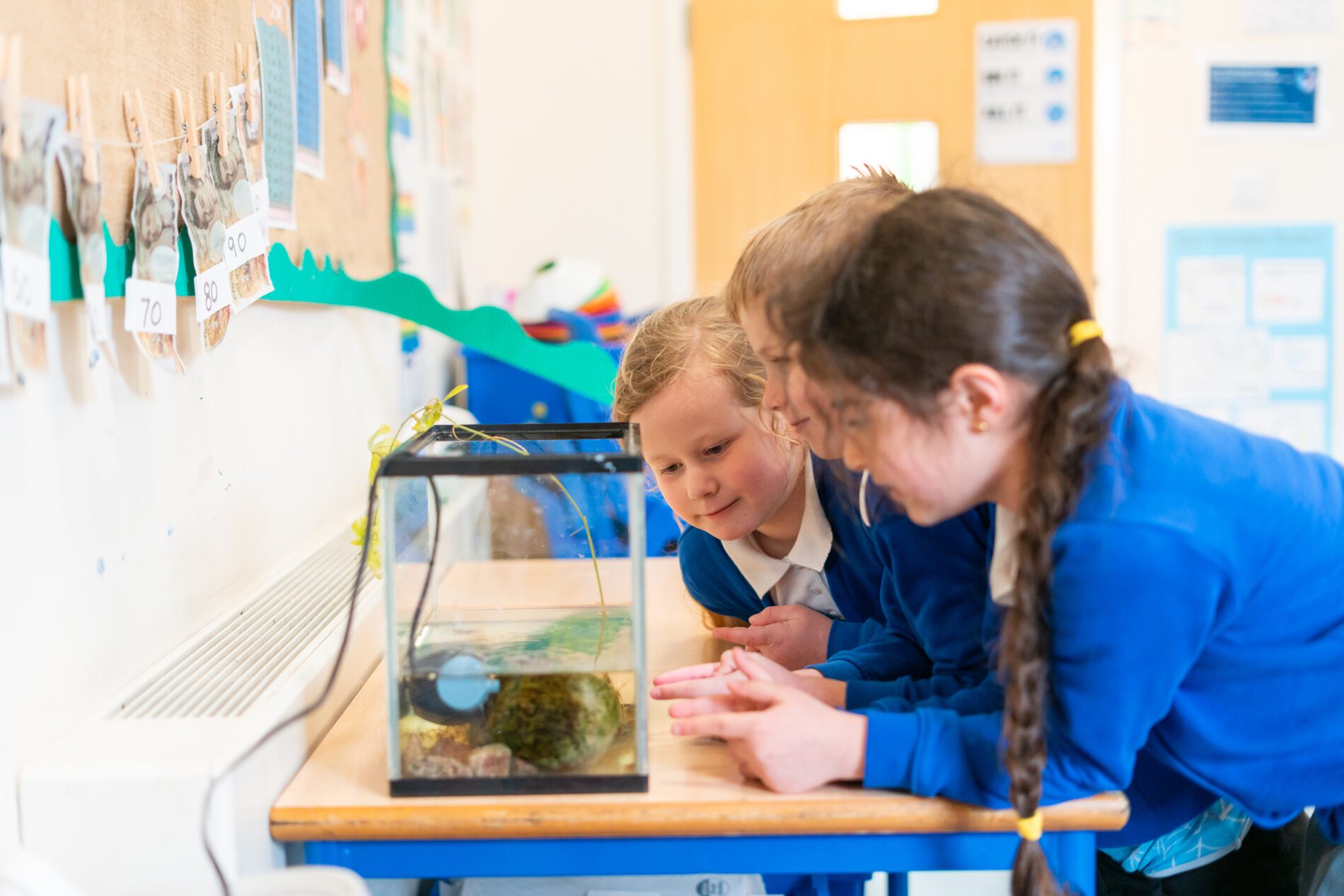
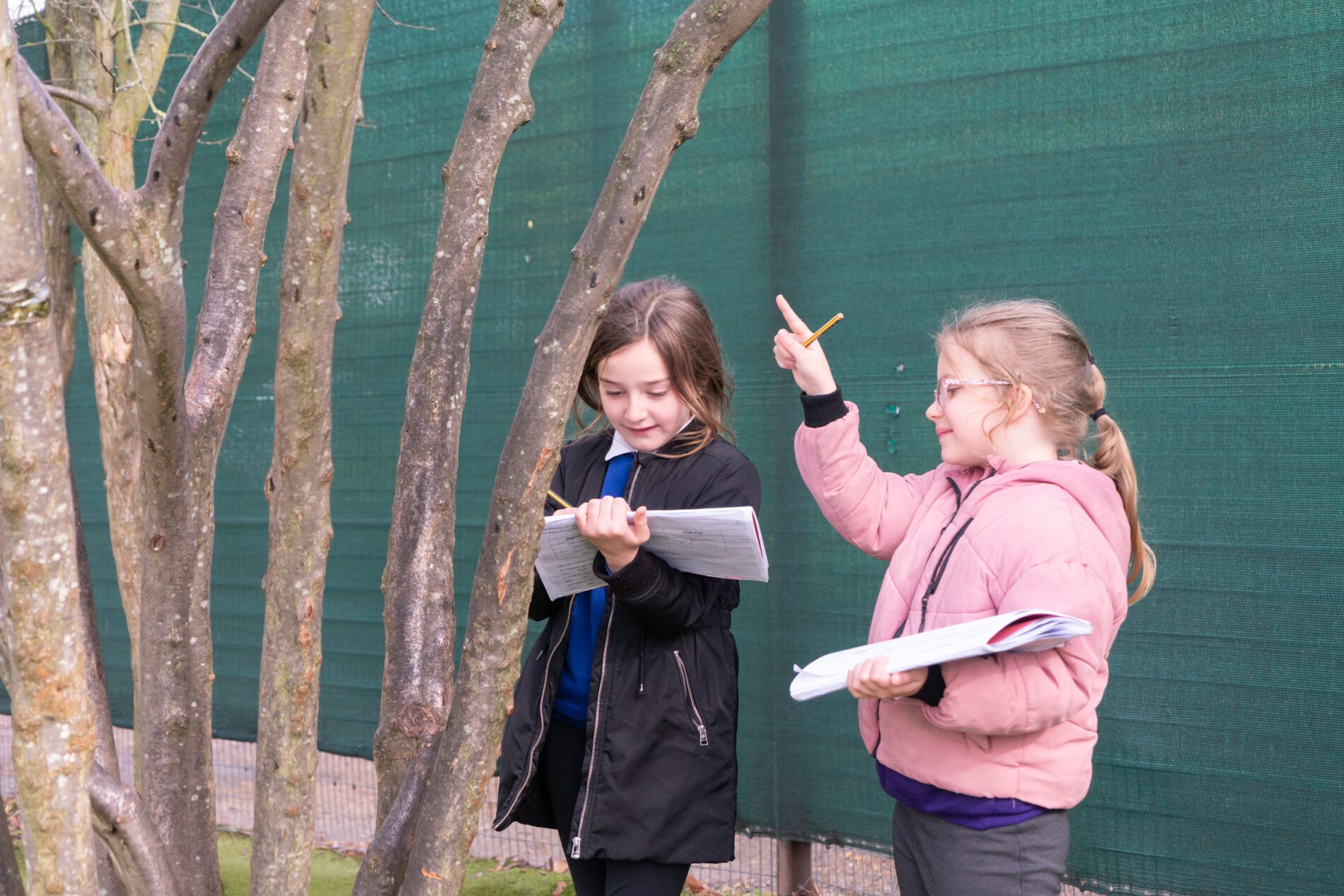
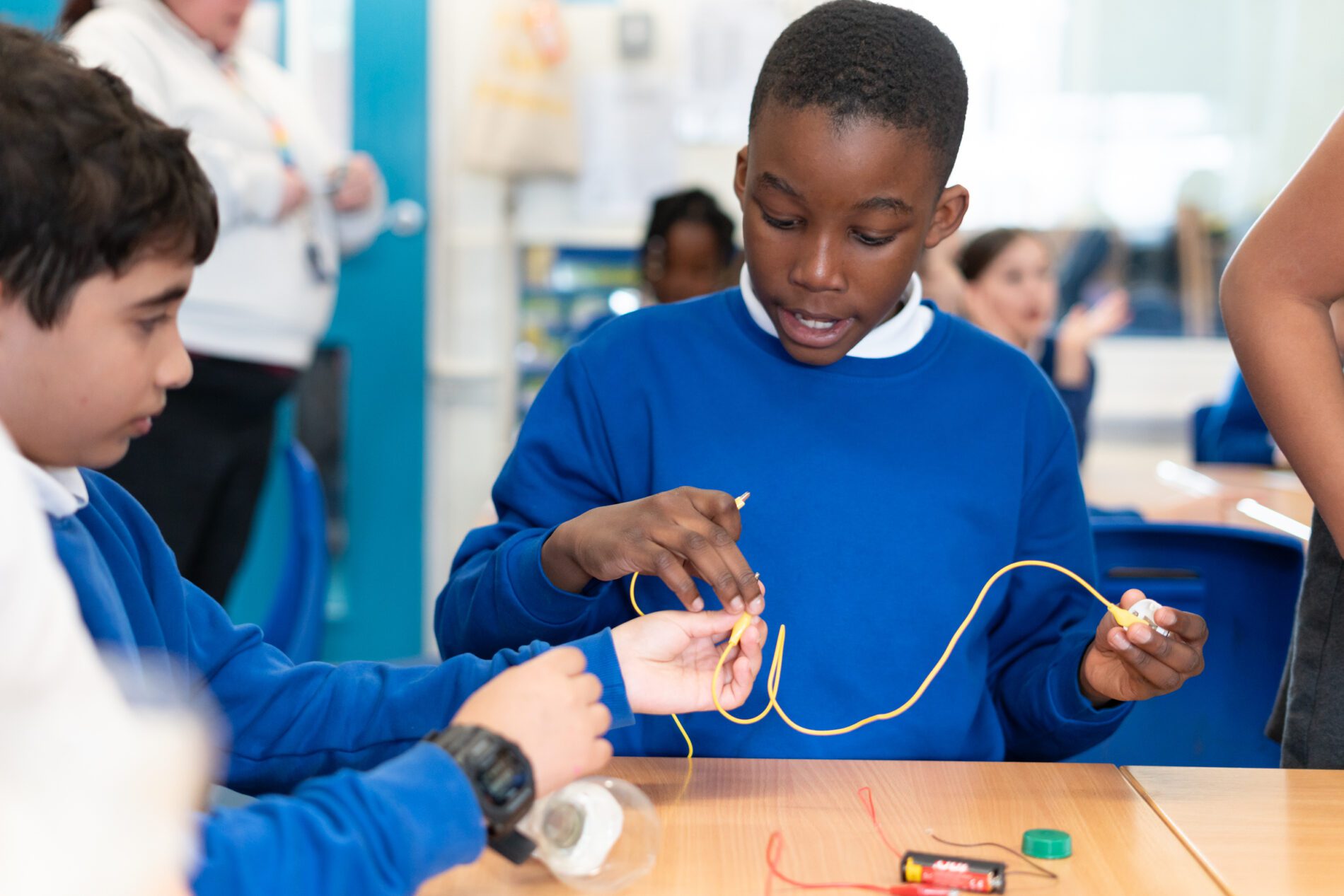
Pupils develop scientific enquiry skills through observation over time, fair/comparative testing, identification and classification, research, and pattern seeking. Practical investigations, experimentation, and hands-on experiences encourage confident explanation, evidence-based reasoning, and understanding of science’s uses and implications.
As a core National Curriculum subject, every class maintains a science working wall to support vocabulary and investigative language, fostering a culture of curiosity, exploration, and scientific thinking.
Implementation
At Whitehill Primary, our Science curriculum is implemented through a carefully sequenced, progressive framework that builds scientific knowledge and enquiry skills from the earliest years through to Year 6. Teachers plan units using our Science Long-Term Plan, ensuring clear continuity and progression across biology, chemistry and physics, and carefully mapped “working scientifically” skills. Lessons blend direct teaching, practical investigations, and enquiry‑based learning, with cross‑curricular links to literacy, maths, computing, PSHE, DT and beyond. Each class maintains a science working wall to support vocabulary and investigative language, reinforcing new learning. Throughout, assessment is ongoing, through observation, recorded investigations and teacher reflection, to ensure that pupils consolidate their understanding, make progress, and retain key scientific knowledge and skills.
Impact
At Whitehill Primary, the impact of our Science curriculum is seen in the knowledge, skills, and attitudes that pupils develop throughout their time at the school. Our curriculum ensures that children build a secure understanding of scientific concepts across biology, chemistry, and physics, while progressively developing the skills of working scientifically through observation, enquiry, experimentation, classification, pattern seeking, and research. Pupils are confident in using age-appropriate scientific vocabulary, explaining concepts, and applying their learning to new contexts.
The curriculum also supports personal development: children grow in curiosity, resilience, independence, and confidence, developing a lifelong interest in exploring and understanding the world around them. Through practical and enquiry-based learning, pupils develop critical thinking and problem-solving skills that extend beyond science lessons.
Monitoring and assessment are integral to ensuring the impact of our curriculum. Science is assessed formatively through observations, discussions, recorded investigations, and pupils’ written work. The subject leader conducts a “deep dive” three times per year, which includes:
-
Book looks to evaluate progress and coverage
-
Teacher questionnaires to assess planning, confidence, and support needs
-
Pupil voice sessions to understand engagement, knowledge retention, and curiosity
This structured monitoring ensures that learning is embedded, progress is tracked, and teaching is adapted to meet pupils’ needs, ensuring high standards of scientific knowledge, skills, and understanding across the school.
Science in Each Stage
We teach science in nursery and reception classes as an integral part of topic work covered during the year. Scientific aspects of the children’s learning are included within the Early Learning Goals (ELGs); science makes a significant contribution to developing a child’s Understanding of the World. However, planning within EYFS however is child centred and an explorative approach built from the child’s own interests. The learning environment, experiences and activities available are designed to encourage this within our children.
In KS1, science is taught regularly as a discrete subject, rooted in the statutory requirements of the national curriculum. Pupils explore topics such as plants, animals (including humans), everyday materials and seasonal change, using simple but meaningful scientific enquiries. They practise observation, simple testing, classification and recording of results, using straightforward scientific language. Lessons are practical and engaging, encouraging pupils to ask questions, use basic equipment, and communicate findings. The progression plan ensures that knowledge and vocabulary are revisited and expanded, laying the groundwork for deeper learning in later years.
Lower Key Stage 2 (Years 3 & 4)
In Lower KS2, pupils build on earlier learning by exploring a broader range of scientific concepts and phenomena. They begin to use more varied enquiry methods — including comparative and fair testing, classification, systematic observation (often with simple measurements), and data gathering; to investigate living things, materials, forces or other topics (as per the long‑term plan). Pupils record their findings using labelled diagrams, tables or simple charts, and begin to draw conclusions, make predictions or raise further questions. Scientific vocabulary is reinforced and extended, and cross‑curricular links (e.g. with maths or computing) are used to deepen understanding.
Upper Key Stage 2 (Years 5 & 6)
In Upper KS2, science is delivered with greater depth and challenge. Pupils tackle more complex concepts, often revisiting earlier topics but exploring them at a more advanced level, and encounter new areas in biology, chemistry or physics. They plan and conduct different types of scientific enquiries, including controlled fair tests, long-term observations or pattern-seeking investigations; using a wider range of equipment, more precise measurements and repeat readings where appropriate. Pupils analyse data, draw evidence-based conclusions, make predictions, and present findings in a variety of formats (written, diagrams, graphs, presentations). Emphasis is placed on understanding the implications and applications of scientific knowledge, preparing pupils to think scientifically about the world now and in the future.
Science Progression
Inclusion & Equal Opportunities
Science forms part of the school curriculum intent to provide a broad, balanced and inclusive curriculum that is coherently planned and sequenced to ensure progression of knowledge, skills and understanding across the school. Challenging, thought-provoking and engaging activities are facilitated by the teacher to stimulate the children and build on their prior knowledge.
Through our science teaching, we provide learning opportunities that enable all pupils to make good progress. At Whitehill we recognise that children have a wide range of scientific abilities, and we ensure that we provide suitable learning opportunities for all children by matching the challenge of the task to the individual child. We achieve this in a variety of ways, for example: setting tasks which are open-ended and can have a variety of responses; setting tasks of increasing difficulty and challenge; providing resources of different complexity. Differentiating expectations for the children’s evaluations of the sessions or investigations they take part in.
Science Extra Resources
For remote learning, please visit our remote learning page or contact our Head of Science for more information.