
Design and Technology Subject Leader: Miss Z Stack-Davis
Design & Technology prepares pupils to deal with the ever-changing world. We aim to combine practical skills with knowledge and understanding; to provide opportunities for children to develop their capability through a variety of life skills including cooking, nutrition, design and making.
Intent
At Whitehill Primary School, we aim to deliver a Design and Technology curriculum that inspires children to think creatively, solve real-life problems and challenge existing ideas. We want pupils to recognise that innovation comes from exploring alternatives and understanding that familiar methods can always be improved.
Our curriculum builds strong technical knowledge and practical skills by drawing on mathematics, science, engineering, computing, art, textiles and cooking. Through this, children learn to design, make and evaluate purposeful products with clear consideration of user, purpose, functionality, design decisions, innovation and authenticity.
DT at Whitehill is a practical and engaging subject in which children learn to take risks, think critically and work both independently and collaboratively. We encourage resilience, resourcefulness and effective problem-solving, helping pupils become capable and confident young designers.
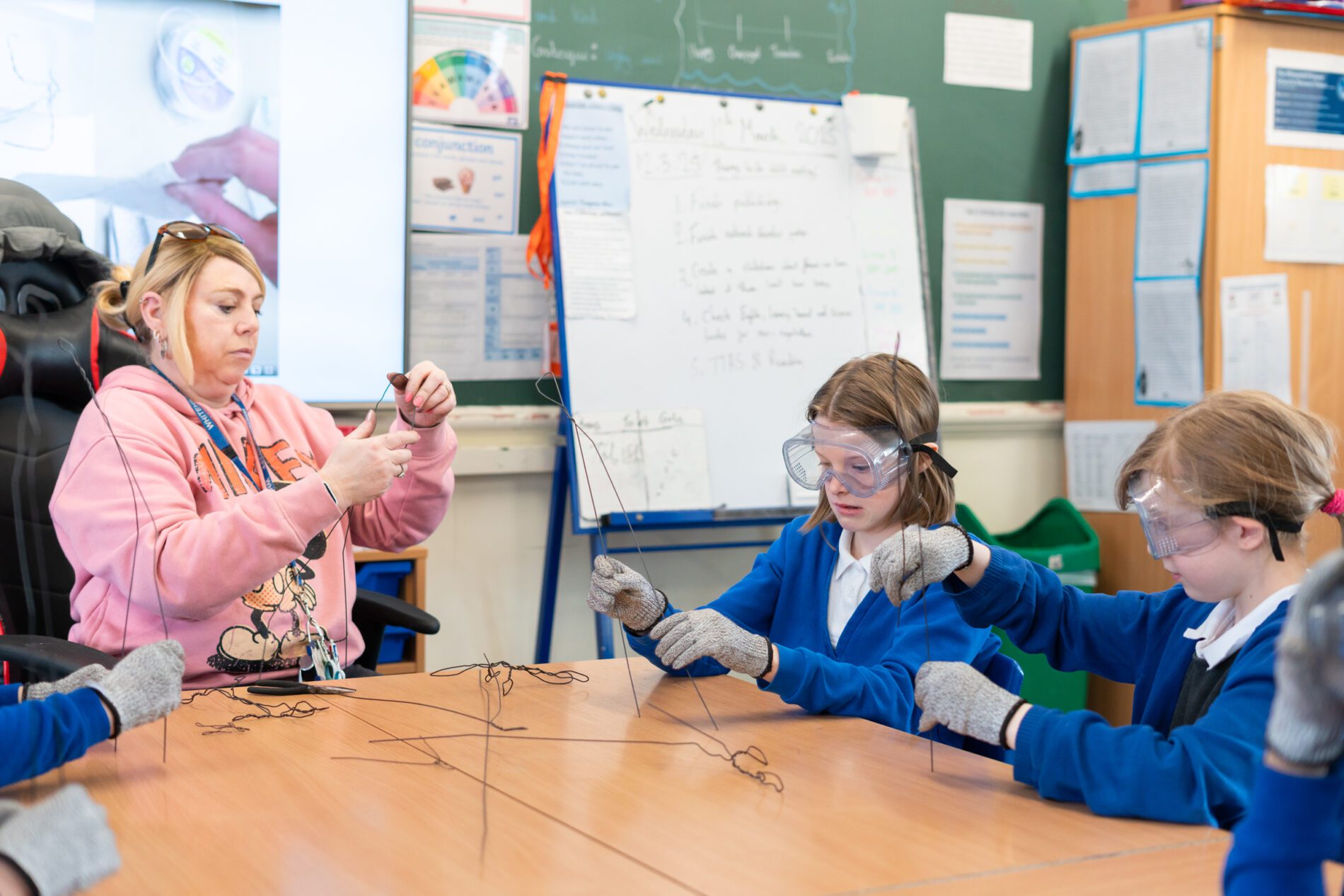
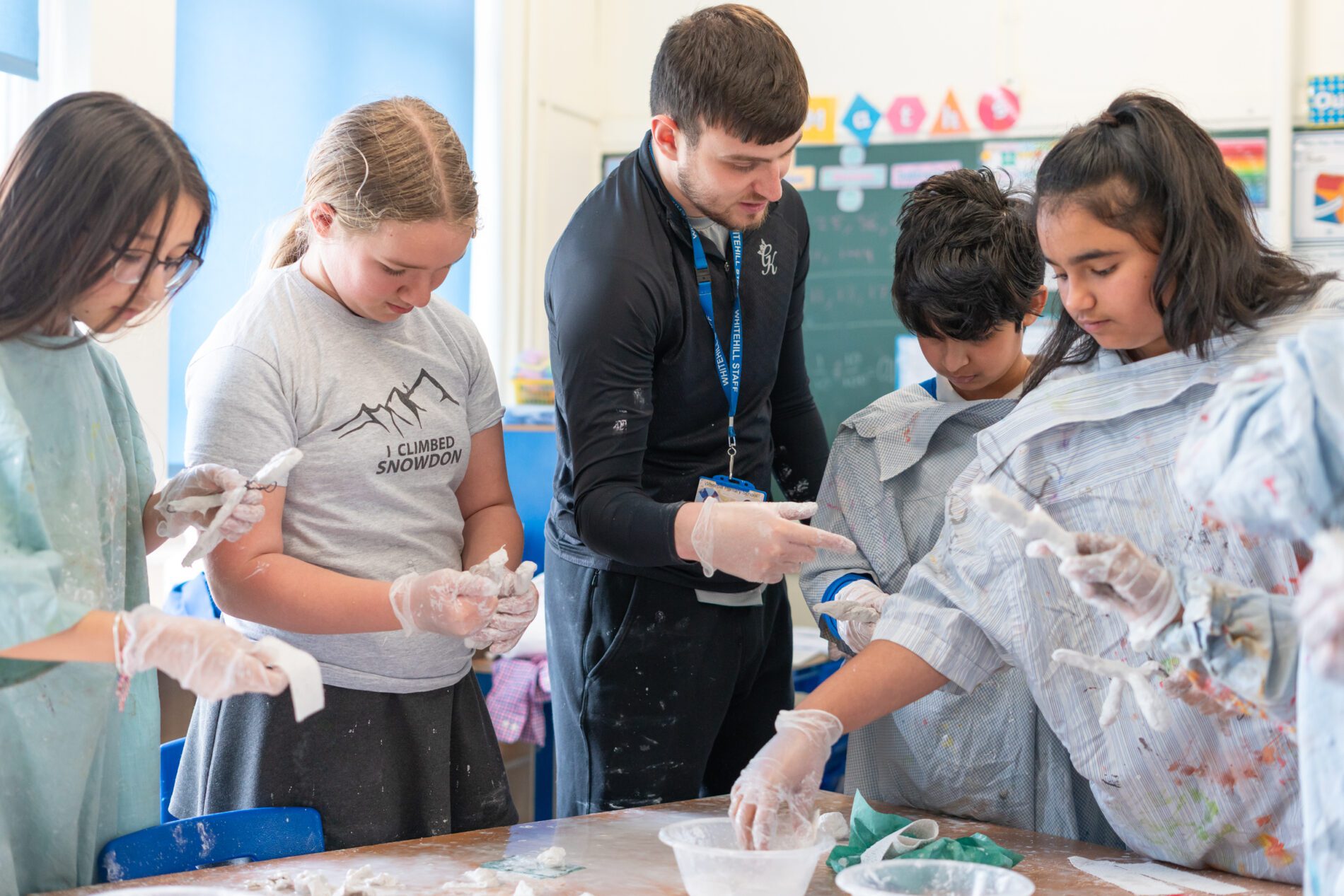
Children learn how things work, develop technical understanding and apply their growing knowledge to create high-quality prototypes and products. They learn to choose appropriate tools safely, understand technological processes, evaluate their own work and the work of others, and appreciate how design and technology shape the world. They also develop essential cooking and nutrition skills and explore key designers and innovations.
Implementation
At Whitehill Primary, our Design and Technology curriculum is implemented through a carefully structured progression that ensures pupils develop knowledge and skills in a logical and meaningful sequence. Teachers use the DT Progression Document to plan units that steadily build pupils’ technical understanding, creative confidence and ability to design and make purposeful products.
Each unit follows a consistent learning sequence, beginning with Investigative and Evaluative Activities (IEAs), where pupils explore existing products and real-world contexts. This is followed by Focused Tasks (FTs), during which specific technical skills, design techniques and knowledge of materials, mechanisms, structures, textiles or food technology are explicitly taught. Pupils then apply their learning through a Design, Make and Evaluate Assignment (DMEA), creating a functional product for a clear user and purpose.
Learning is practical, hands-on and rooted in purposeful contexts, allowing children to experiment, take risks and understand how ideas move from concept to prototype to finished outcome. Technical vocabulary is taught explicitly and used consistently, supporting pupils in communicating their ideas and evaluating design decisions with increasing precision.
The curriculum is enriched through meaningful cross-curricular links, particularly with science, mathematics, art, computing and PSHE; enhancing pupils’ understanding of how DT draws on knowledge from multiple disciplines. Teachers ensure that pupils work safely, make choices about suitable tools and materials, and develop independence and responsibility in both individual and collaborative tasks.
Through this structured, progressive and practical approach, pupils experience the full breadth of DT and develop the creative and technical capability to design and make high-quality products.
Impact
The impact of the Design and Technology curriculum at Whitehill Primary is evident in the knowledge, skills and confidence that pupils develop as they progress through the school. Teachers make ongoing, informal assessments by observing pupils at work, engaging in discussions, and reviewing children’s plans, ideas, and practical outcomes. At the end of each unit, simple assessments are recorded to identify children who are working below, at, or above age-related expectations, ensuring that progress is tracked over time.
Monitoring takes place regularly through sampling children’s work, reviewing teacher planning, and conducting lesson observations. The Design and Technology subject leader undertakes regular and robust monitoring activities, including learning walks, book looks, and analysis of assessment data, to gauge the impact of the curriculum. This process allows for the review and refinement of teaching sequences, resources, and activities to ensure that the DT curriculum meets the needs of all learners.
Findings from monitoring and assessment inform professional development for staff and are shared with governors and the wider school community to address gaps, enhance provision, and celebrate successes. Through this structured approach, pupils develop technical knowledge, creativity, problem-solving skills, resilience, and independence, enabling them to design and make high-quality products and gain confidence as capable, innovative learners.

Design and Tehnology in Each Stage
In EYFS, children explore a variety of materials, tools, and techniques to develop curiosity and creativity. They use drawing, construction kits, and role play to represent ideas, experiment with textures, and join materials. They begin to make choices about which materials to use and can discuss their creations, developing confidence in expressing their ideas and understanding the creative process.
In Key Stage 1, pupils build on early exploration to design and make simple functional products. They learn to plan, use basic mechanisms, join materials appropriately, and evaluate their outcomes. Projects include making moving pictures, puppets, vehicles, and simple food products. Pupils develop technical vocabulary, practise specific skills, and begin to understand the purpose of their designs for different users.
Lower KS2 (Years 3–4)
In Lower KS2, children progress to more complex structures, mechanisms, textiles, and food projects. They research and analyse existing products, apply technical knowledge, and use skills such as sewing, triangulation in structures, and mechanisms in vehicles. Pupils design with a clear user and purpose in mind, test functionality, make improvements, and record their evaluations, developing independence and problem-solving skills.
Upper KS2 (Years 5–6)
In Upper KS2, pupils tackle increasingly sophisticated projects involving mechanical systems, electrical circuits, textiles, structures, and food technology. They plan and develop prototypes using precise measurements, understand forces, technical vocabulary, and mechanisms, and evaluate the effectiveness and aesthetic of their products. Pupils refine ideas, apply cross-disciplinary knowledge, and demonstrate creativity, resilience, and critical thinking to produce high-quality, purposeful outcomes.
Design and Technology Progression
At Sedley’s, we develop our pupil’s Design and Technology understanding through essential skills; growing their depth of knowledge year on year.
Inclusion & Equal Opportunities
At Whitehill Primary School we expect all children to participate in Design and Technology projects. Specialist equipment and support will be sought and provided for any children who need them in order that they will be included within and have access to tasks in Design and Technology. The subject co-ordinator will liaise closely with the SENCO (Special Needs Coordinator) to ensure that all our children have differentiated access to Design. We aim to provide learning opportunities that match the needs of children with specific learning needs and those children who are gifted and talented.
Through our Design and Technology lessons we:
- Set suitable learning challenges for all learners
- Respond to children’s diverse needs by using a wide range of cultural images and products
- Address gender stereotypes
- Actively encourage all children’s design ideas and value all suggested ideas.
- Adapt activities and instructions for children with special needs, disabilities and English as an additional language (EAL)
- Encourage all children to achieve as much independence as is compatible with their disability.
- Identify the gifted and talented children and challenge them further
- Provide quality first teaching
Enrichment & Beyond the Classroom
At Whitehill Primary School we enjoy taking part in workshops and learning experiences in the wider community; through which we also make cultural links.
We especially welcome the insights and experiences of people who have Science, Technology, Engineering, Art and Maths (STEAM) related professions and knowledge. As such, there are times that we invite such professionals into school to enrich our curriculum, to inspire and work with the children.
These might be parents, grandparents, other family members, neighbours or representatives of the local community.